Emergency Roof Repair in Los Angeles, CA
24/7 Emergency Emergency Roof Repair Available in Los Angeles, CA
Need emergency roof repair in Los Angeles, CA? BlueHaven Roofing responds in 2 hours or less, 24/7. Call (323) 831-7787 for fast, expert storm damage repair.
- Licensed & Insured
- Locally Owned & Operated
- Free Inspection & Estimate
Request Your
Free EstimateWhen a roofing crisis strikes your Los Angeles home or business, every minute matters. Emergency roof repair is the rapid, professional response to sudden roof damage caused by storms, falling debris, structural failure, or unexpected leaks that threaten your property and safety. In a city defined by diverse microclimates — from the marine layer of Santa Monica to the scorching heat of the San Fernando Valley — roofs here face year-round stress unlike most of the country.
BlueHaven Roofing Repair Service LA provides fast-response emergency roof repair across Los Angeles, CA, dispatching trained technicians to assess and stabilize damaged roofs before water intrusion, mold, or structural compromise escalate into far costlier problems. Whether you're dealing with a mid-January atmospheric river that's torn flashing off your Silver Lake bungalow or a debris strike in Woodland Hills following a windstorm, our team arrives equipped, informed, and ready to protect your property immediately.
Call us now at (323) 831-7787 for same-day emergency service across Los Angeles County.
Understanding Emergency Roof Repair
Emergency roof repair refers to unscheduled, urgent intervention performed to stop active damage, prevent water intrusion, and restore structural integrity to a roof that has been compromised suddenly and unexpectedly. Unlike routine maintenance or planned replacement, emergency repairs are reactive by nature — they happen when a roof fails in ways that cannot safely wait days or weeks for a scheduled appointment.
The concept of emergency roofing services evolved significantly throughout Southern California during the late 20th century, largely driven by the region's recurring cycles of extreme weather, seismic activity, and rapid urban growth. As Los Angeles expanded from its historic core outward into hillside communities, canyon-adjacent neighborhoods, and sprawling valley suburbs, the variety of roofing systems installed across the city grew enormously. Spanish-style clay tile roofs common in neighborhoods like Los Feliz and Hancock Park behave very differently under stress compared to the flat built-up roofing (BUR) systems typical of Mid-City commercial strips or the modern TPO membranes found atop newer Culver City mixed-use buildings.
Los Angeles County contains more than 3.9 million housing units according to U.S. Census data, spanning construction eras from pre-1920 Craftsman bungalows to 2020s modular apartment buildings. This diversity means emergency roofing crews must be versed in a wide spectrum of materials, attachment systems, and failure modes. A 1940s-era flat roof in Leimert Park fails differently than a 1970s wood shake roof in Tarzana, and both require different emergency approaches than a 2005-vintage tile roof in Porter Ranch.
Understanding which failure type you're dealing with — whether it's a flashing separation, a puncture from wind-borne debris, a cracked ridge cap, or a failed underlayment — determines how quickly the problem must be addressed and what temporary stabilization measures are appropriate while permanent repair is planned. Emergency roof repair is fundamentally about triage: stopping the bleeding first, then diagnosing the underlying condition with precision.
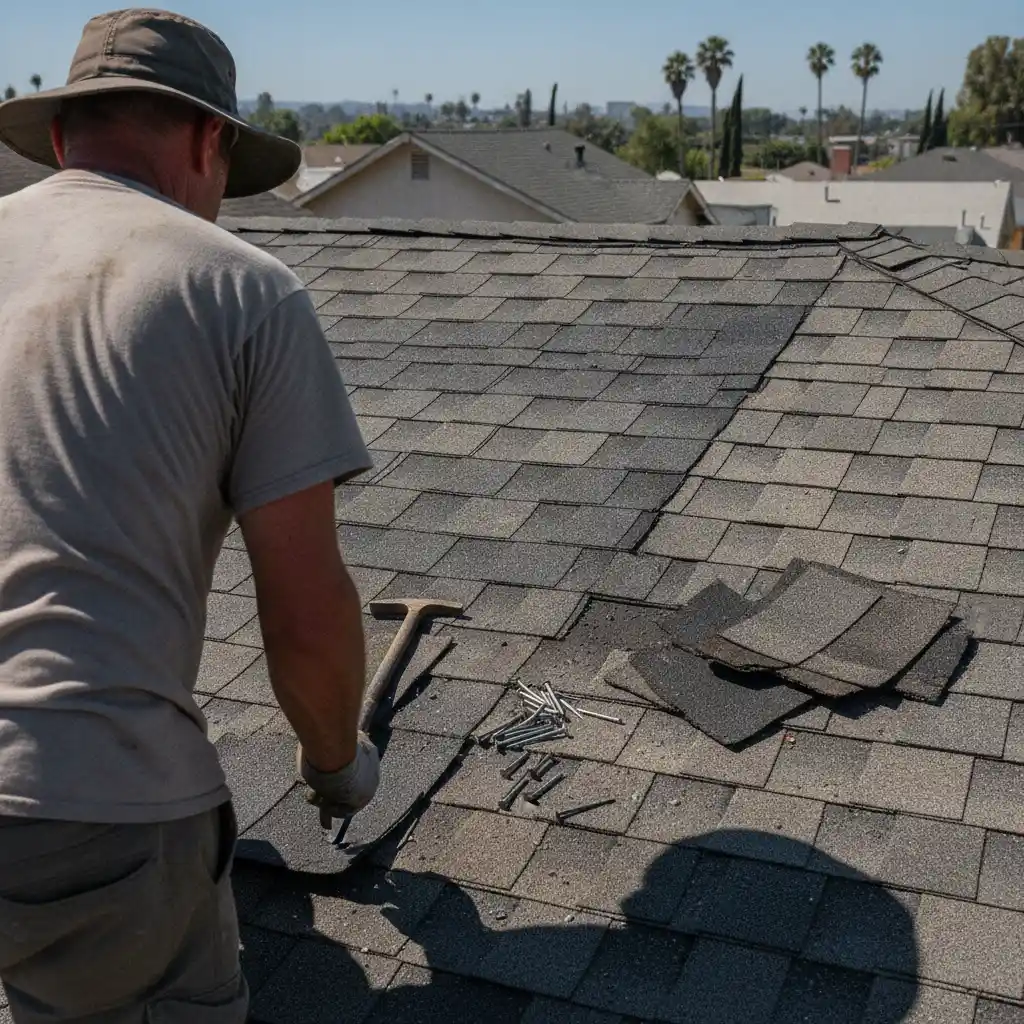
Our team in action — roof-repair professionals serving Los Angeles
Why Emergency Roof Repair Is Needed in Los Angeles, CA
Atmospheric River Events
California's atmospheric rivers — long corridors of concentrated moisture originating in the Pacific — deliver the majority of Los Angeles's annual rainfall in short, intense bursts. The January 2023 atmospheric river series dropped over 10 inches of rain on downtown Los Angeles within two weeks, with some hillside communities recording more than 20 inches. Roofs that had been essentially dry for eight or nine months preceding these events were suddenly subjected to sustained saturation, exposing cracked caulking, failed flashing, and dried-out underlayment that allowed water to penetrate rapidly. Neighborhoods in the hills above Echo Park, Glassell Park, and Mount Washington saw particular concentrations of emergency calls during this period.
Santa Ana Wind Events
The Santa Ana winds, which funnel through mountain passes from the Inland Empire toward the coast, regularly gust to 60–80 mph in neighborhoods like Granada Hills, Chatsworth, and the Malibu hills. Wind speeds of this magnitude are sufficient to lift improperly secured clay tiles, tear aged asphalt shingles, and dislodge ridge caps. The October 2019 Tick Fire and the Woolsey Fire of November 2018 demonstrated how Santa Ana conditions can combine with ember cast to compromise roof materials across entire neighborhoods in the West San Fernando Valley within hours.
Seismic Activity
Los Angeles sits atop a complex fault network including the San Andreas, Puente Hills, and Newport-Inglewood faults. Even moderate seismic events — in the magnitude 4.0–5.5 range, which Los Angeles experiences several times per year — can crack mortar bed-set clay tile systems, shift ridge lines, and loosen flashing connections on older unreinforced masonry chimneys that penetrate rooflines in historic neighborhoods like Angelino Heights and West Adams.
Thermal Cycling in Inland Communities
The San Fernando Valley regularly records summer temperatures above 100°F, while winter nights can drop to near freezing. This 70-degree-plus daily temperature swing across the year causes roofing materials to expand and contract repeatedly, accelerating cracking in aged asphalt and embrittlement in rubber membrane flashings. Communities like Van Nuys, Pacoima, and North Hollywood experience more thermal-driven roof failures than their coastal counterparts in Venice or Pacific Palisades.
Wildfire Ember Damage
During fire weather, embers can travel miles ahead of a fire front and land on roofs. Even Class A-rated roofing materials can sustain surface damage from ember accumulation in roof valleys, gutters, and around penetrations, creating weak points that manifest as leaks in the next rain event — sometimes months after the original fire event.
Signs You Need Emergency Roof Repair
Immediate Safety Indicators
- Visible sagging or deflection in the roof deck visible from inside or outside
- Active water streaming or dripping through ceiling during rain
- Daylight visible through the roof from inside the attic
- Exposed structural members after a windstorm or impact
Post-Storm Warning Signs
- Missing clay tiles, shingles, or sections of flat roofing membrane
- Dislodged or bent flashing around chimneys, skylights, or HVAC units
- Gutters pulled away from the fascia board
- Visible debris accumulation on the roof from a wind or fire event
- Granule loss from asphalt shingles visible in downspout discharge
Interior Warning Signs
- Water stains expanding on ceilings or interior walls after a rain event
- Bubbling or peeling paint on ceilings in rooms directly below the roofline
- Musty odor in attic space suggesting prolonged moisture intrusion
- Mold spots appearing on interior ceiling surfaces
Urgency Indicators
If you observe active water entry, structural deflection, or any condition that appears to be worsening in real time, treat it as an emergency. Do not wait for the next business day. Call (323) 831-7787 immediately.
Emergency Roof Repair Methods and Approaches
Emergency Tarping and Temporary Covering
The most immediate response for large-area damage — particularly following wind events or debris strikes — is professional-grade tarping. Unlike consumer tarps, commercial roofing tarps are anchored using systems that don't introduce additional penetrations into the damaged roof. This method is appropriate when damage covers more than a few square feet and when rain is forecast within 24–48 hours, which in Los Angeles means primarily during the November–April window. Learn more about our roof tarping services
Emergency Sealant Application
For localized failures — cracked flashing, open pipe boot seals, or small punctures — we apply professional-grade polyurethane or elastomeric sealants capable of adhering to wet or damp substrates. This is particularly effective for flat commercial roofs common along Wilshire Boulevard, Pico-Robertson, and in Downtown LA's Arts District.
Tile Resetting and Replacement
For clay or concrete tile roofs — common throughout historic Los Angeles neighborhoods from Hollywood Hills to San Marino — missing or cracked tiles can be replaced on an emergency basis using mortar or mechanical fasteners, restoring waterproofing coverage quickly without requiring a full tile replacement project.
Flashing Repair and Re-Anchoring
Displaced or torn flashing around chimneys, skylights, and roof penetrations is one of the most common single-point failure modes in Los Angeles, particularly in older homes in neighborhoods like Silverlake, Echo Park, and Atwater Village where original flashing may be 30–60 years old. Emergency flashing repair stops concentrated water intrusion at its most vulnerable points.
Deck Boarding and Structural Patching
Where the roof deck itself has been compromised — whether from water-softened sheathing, fire damage, or impact — emergency deck boarding stabilizes the structural layer before permanent repairs restore full integrity. Explore our comprehensive roof repair options
Ready for Emergency Roof Repair? Get Your Free Estimate Today.
BlueHaven Roofing Repair Service LA serves Los Angeles and the surrounding area — we'll be on-site within 24 hours.
📞 Call (323) 831-7787Emergency Roof Repair Cost in Los Angeles, CA
Understanding the cost of emergency roof repair helps Los Angeles homeowners and business owners make informed decisions quickly during a crisis. Pricing varies based on damage scope, roof type, and access conditions.
Typical Cost Ranges
- Emergency inspection and tarp installation: $350–$850 depending on roof size and pitch
- Minor localized repairs (sealant, flashing, 1–3 tiles): $400–$1,200
- Moderate storm damage repair (partial shingle or tile replacement, flashing reset): $1,500–$4,500
- Major structural or large-area repairs: $5,000–$15,000+
- Flat commercial roof emergency repairs: $800–$6,000 depending on membrane type and damage area
Los Angeles-Specific Cost Factors
Emergency roof repair costs in Los Angeles are influenced by several local factors. Labor costs in Los Angeles County run approximately 20–35% higher than national averages due to prevailing wage rates and cost of living. Clay tile — the dominant roofing material in many historic LA neighborhoods — costs significantly more to repair per square than asphalt shingle systems, both in material and skilled labor time. Los Angeles permitting fees for structural repairs add $200–$700 depending on the scope, and some repairs in hillside Fire Hazard Severity Zones require additional documentation under California's Title 24 building standards.
Insurance Considerations
Many emergency roof repairs in Los Angeles qualify for homeowner's insurance coverage under sudden and accidental damage clauses. We provide complete documentation to support your claim filing with carriers operating in California. Schedule a post-storm roof inspection
Los Angeles Neighborhoods We Serve
Silver Lake and Echo Park
These hillside neighborhoods contain high concentrations of 1920s–1940s craftsman bungalows and Spanish Colonial revival homes, many with original clay tile roofing and aged mortar bed installations that are particularly vulnerable to seismic movement and heavy rainfall. Steep lot grades also create specialized access challenges for roofing crews.
Sherman Oaks and Van Nuys
These San Fernando Valley communities blend post-war tract homes from the 1950s–1970s with newer construction. Thermal extremes make flat and low-slope roofs in this area particularly susceptible to membrane cracking and flashing failure, and atmospheric river events hit these communities with significant intensity.
Woodland Hills and West Hills
Located at the western edge of the San Fernando Valley adjacent to the Santa Monica Mountains, these communities fall within designated Fire Hazard Severity Zones and experience the full force of Santa Ana wind events. Emergency repairs here often follow wind or fire-related events and must comply with Los Angeles County fire-resistant roofing material requirements.
Hollywood Hills and Los Feliz
Hillside properties in these neighborhoods present significant access challenges and feature diverse roofing eras ranging from 1920s Mediterranean tile roofs to 1960s mid-century flat roofs requiring specialized emergency approach strategies.
Downtown LA and Mid-Wilshire
Commercial and mixed-use buildings with flat TPO, EPDM, and built-up roofing systems require commercial-grade emergency repair expertise distinct from residential approaches. Learn about our commercial roofing services
Roof Maintenance Tips for Los Angeles Property Owners
Preventing emergencies starts with proactive maintenance calibrated to Los Angeles's specific conditions.
- Pre-rain season inspection: Schedule a professional inspection in October or November before the November–April rainy season. This is the single highest-return maintenance action for LA homeowners.
- Clear gutters of debris: Los Angeles's year-round vegetation — including palm fronds, eucalyptus leaves, and jacaranda blooms — fills gutters rapidly and causes water backup against fascia boards.
- Inspect and reseal flashing annually: UV exposure accelerates caulk and sealant degradation around chimneys, skylights, and HVAC penetrations. Annual resealing costs a fraction of emergency water intrusion repair.
- After Santa Ana events, walk the perimeter: Check for displaced tiles, lifted shingle sections, or debris accumulation in roof valleys after any wind event exceeding 40 mph.
- Trim overhanging trees: Eucalyptus, pine, and mature oak branches overhanging roofs create debris load, abrasion damage, and fire ember traps during red flag weather.
- Check attic ventilation: In LA's heat, inadequate attic ventilation accelerates shingle aging — inspect ridge and soffit vents annually to ensure they remain clear.
- Document your roof's age and materials: Knowing your roofing system helps emergency crews respond faster and more accurately. Schedule a professional roof inspection today
Why Choose BlueHaven Roofing Repair Service LA
When a roofing emergency strikes in Los Angeles, you need a local team that understands this city's specific building stock, weather patterns, fire risks, and regulatory environment — not a regional call center dispatching unfamiliar crews.
BlueHaven Roofing Repair Service LA operates exclusively in Los Angeles, meaning our technicians know the difference between tile roofing systems in Hancock Park and TPO membranes in the Arts District. We understand the City of Los Angeles Department of Building and Safety permit requirements, the Fire Hazard Severity Zone restrictions that affect roofing material choices in hillside communities, and the insurance documentation standards California carriers expect after storm events.
We respond to emergency calls across all of Los Angeles with the urgency your situation demands. Our team arrives with the materials, tools, and expertise to stop damage immediately — not just assess and schedule a return visit.
We also provide clear, written estimates before work begins, detailed insurance documentation to support your claim, and follow-up inspections to verify repair quality. When you call BlueHaven, you reach a team that treats your LA property like the significant investment it is.
Call us at (323) 831-7787 — 24 hours a day, 7 days a week.
Frequently Asked Questions About Emergency Roof Repair in Los Angeles
How quickly can BlueHaven respond to a roofing emergency in Los Angeles?
In most areas of Los Angeles, we target a response time of two hours or less from your initial call. Traffic conditions in LA can affect exact timing, but we dispatch the closest available crew and communicate arrival estimates clearly. We are available 24/7, including weekends and holidays.
How much does emergency roof repair cost in Los Angeles?
Emergency roof repair in Los Angeles typically ranges from $350 for minor tarping or sealant work to $15,000 or more for significant structural damage repairs. The most common emergency repairs for single-family homes fall in the $800–$4,500 range. We provide a written estimate before beginning any work beyond immediate safety stabilization. See detailed roof repair cost information
Will my homeowner's insurance cover emergency roof repair in Los Angeles?
Many emergency roof repairs qualify for coverage under standard homeowner's insurance policies in California when damage results from a sudden, accidental event such as a windstorm, falling tree, or fire. Gradual deterioration is typically not covered. We provide comprehensive photographic documentation and written damage assessments designed to support your California insurance claim. Contact your carrier promptly after any emergency event.
Do I need a permit for emergency roof repair in Los Angeles?
The City of Los Angeles requires permits for structural roof repairs and full replacements but generally does not require permits for minor repair work such as patching, flashing repair, or tile replacement. Emergency tarping and stabilization work does not require a permit. We advise you of any permit requirements as part of our written scope before permanent repairs begin.
My roof is a clay tile system common in LA. Is emergency repair different for tile roofs?
Yes, significantly. Clay and concrete tile roofs require technicians experienced in tile removal, underlayment inspection, mortar bed assessment, and proper tile re-anchoring. Improper emergency repair on a tile roof can introduce new damage. Our crews are specifically trained in the tile roofing systems common across historic Los Angeles neighborhoods from Los Feliz to Pasadena. Learn about our tile roof repair services
What should I do immediately after roof damage occurs in Los Angeles?
First, ensure all occupants are safe and move away from areas with active water intrusion or visible structural compromise. Do not attempt to access a damaged roof yourself. Call BlueHaven at (323) 831-7787, then contact your insurance carrier to report the damage. If possible, place buckets under active drips and move valuables away from affected ceiling areas while you wait for our crew to arrive.
How long does emergency roof repair take in Los Angeles?
Emergency stabilization — tarping, sealant application, temporary flashing — typically takes 1–4 hours on-site depending on roof size and damage extent. Permanent repair scheduling depends on material availability and permit requirements, but most permanent repairs are completed within 3–7 days of the emergency response visit.
Do you serve hillside properties in Los Angeles?
Yes. BlueHaven Roofing Repair Service LA has experience accessing steep hillside properties in neighborhoods throughout the Santa Monica Mountains foothills, Hollywood Hills, Silver Lake, and the canyons above Topanga and Malibu. Hillside access requires specialized equipment and safety protocols that our crew is trained and equipped to execute safely.
Get Emergency Roof Repair in Los Angeles Now
A roof emergency in Los Angeles cannot wait. Every hour of delay means more water intrusion, more structural risk, and more damage to your property and belongings. BlueHaven Roofing Repair Service LA is standing by to respond across all of Los Angeles, CA — from the San Fernando Valley to the South Bay, from Hollywood Hills to East LA.
Call us right now at (323) 831-7787 for immediate emergency response. Our team is available 24 hours a day, 7 days a week, 365 days a year — because roofing emergencies don't follow business hours, and neither do we.
Don't let a damaged roof threaten your Los Angeles property. One call gets help on the way. Contact BlueHaven Roofing Repair Service LA today